Francesco Pappalardo, from the University of Catania, presented ERAMET as a concrete example of an ecosystem supporting pediatric rare disease research and the application of New Approach Methodologies, or NAMs.
The presentation highlighted ERAMET’s vision: to deliver an ecosystem that can support regulatory submissions and the assessment of model-informed approaches applied to pediatric and orphan drug development. This vision is built around data-driven interrogation of scientific information and stronger support for the selection, implementation, performance assessment and benchmarking of modelling and simulation tools.
ERAMET is structured around three main pillars: a repository connecting questions, data and methods; the development and validation of high-quality standards for data and methods; and an AI-based approach to automate data collection and credibility assessment.
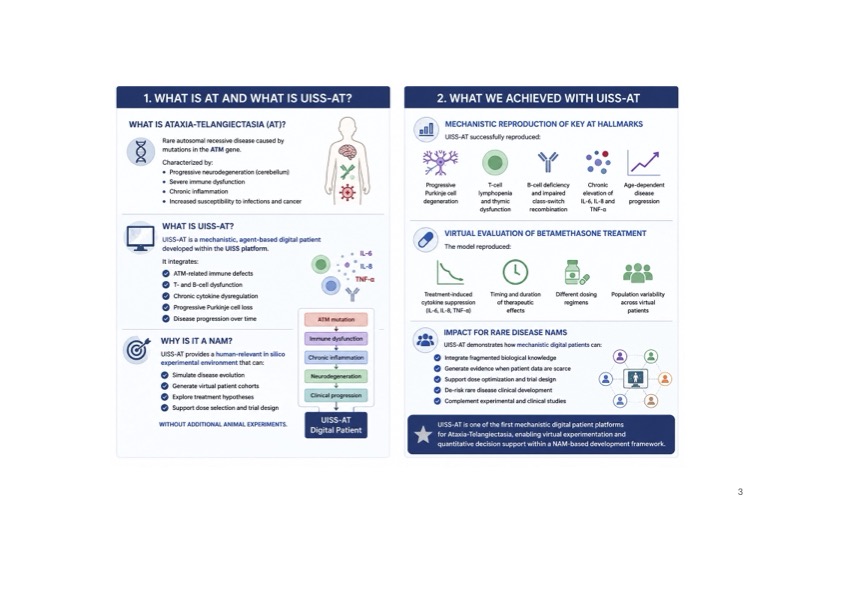
As part of the presentation, UISS-AT was showcased as a practical example of how NAMs can support rare disease research. UISS-AT is a mechanistic, agent-based digital patient model developed within the UISS platform for Ataxia-Telangiectasia, a rare autosomal recessive disease caused by mutations in the ATM gene. The model integrates key disease features such as immune dysfunction, chronic inflammation, progressive neurodegeneration and clinical progression.
The presentation also showed how UISS-AT can reproduce key hallmarks of Ataxia-Telangiectasia and support the virtual evaluation of treatment strategies, including timing, duration, dosing regimens and variability across virtual patient populations. This demonstrates how in silico models can contribute to rare disease NAMs by integrating fragmented biological knowledge, generating evidence when patient data are scarce, supporting dose optimisation and trial design, and helping to de-risk rare disease clinical development.
By presenting ERAMET alongside this concrete example, Francesco Pappalardo underlined the project’s role in advancing model-informed, human-relevant and non-animal methodologies for pediatric rare diseases. ERAMET aims to strengthen the bridge between scientific innovation, regulatory needs and patient-centred drug development, contributing to a more robust ecosystem for the future of pediatric and orphan medicine.