
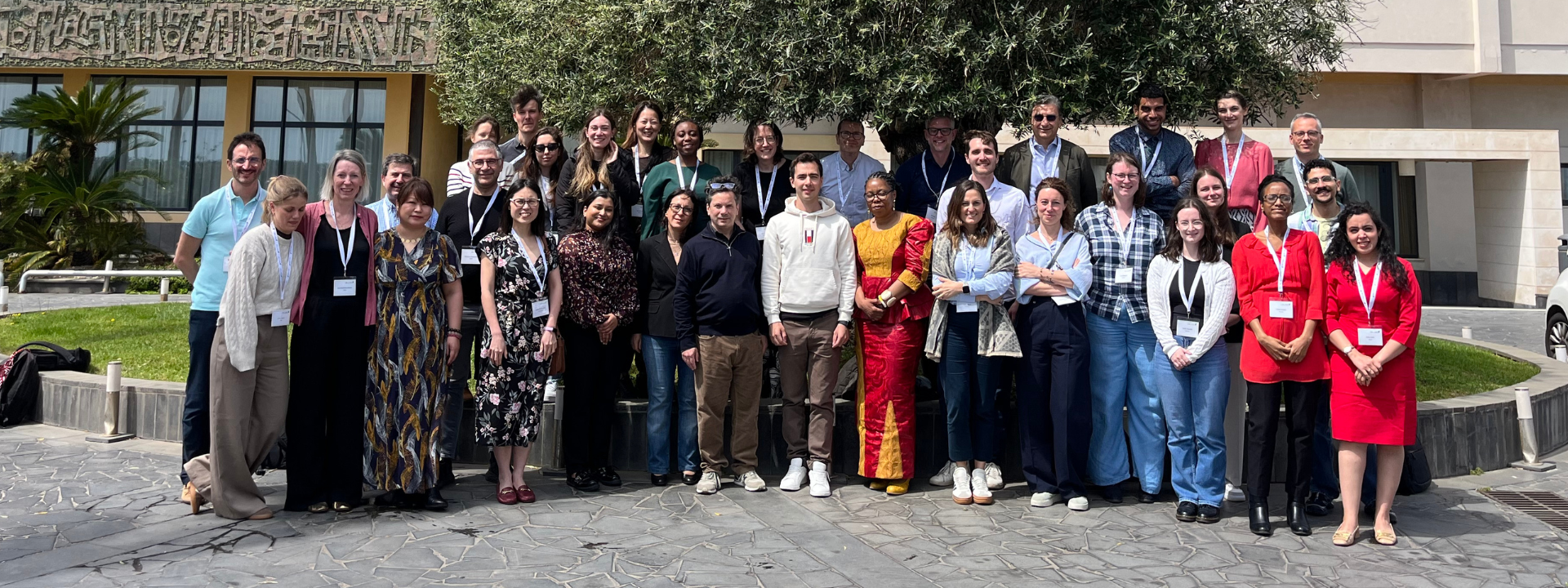

From 14-16 April, the ERAMET team gathered in Catania, Italy, for a productive face-to-face meeting, bringing together consortium members to review progress and align on the next phase of the project.
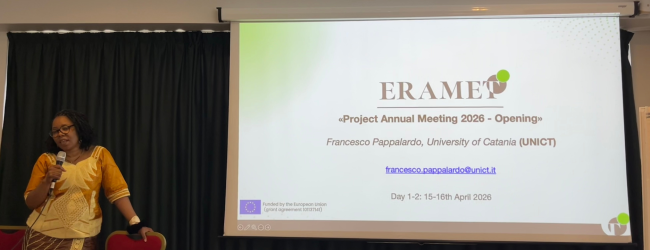
Organised as an Open Day, accessible also online, the meeting started with welcome remarks and a comprehensive project overview, setting the scene for a day focused on both scientific progress and strategic direction. Major developments were presented, including the ERAMET AI platform and a suite of regulatory AI tools designed to support decision-making. These advancements reflect the project’s ambition to integrate innovative modelling approaches into regulatory and drug development processes.
A central theme throughout the meeting was the application of ERAMET’s question-centric approach, which is being used to address both regulatory and drug development challenges. Through case presentations, progress was demonstrated in areas like paediatric extrapolation, virtual population generation, and stochastic simulation for study design optimisation and long-term safety prediction. Applications in complex disease areas, including paediatric tuberculosis and haemoglobinopathies, highlighting the project’s relevance for paediatric and rare disease research.
The discussions also emphasised the project’s increasing focus on regulatory impact. The consortium agreed on an action plan to prepare regulatory submissions for key use cases, making a significant step towards real-world implementation. In parallel, efforts to strengthen collaboration with regulatory authorities were highlighted, with ongoing exchanges aimed at aligning ERAMET outputs with regulatory expectations.
Another important topic was data sharing and collaboration with initiatives in the field of paediatric and rare diseases, reinforcing the project’s commitment to openness and ecosystem building. At the same time, areas were acknowledged for improvement, it was mentioned the need for “improved communication,” “stronger integration across work packages,” and “increased regulatory alignment.” The meeting formed part of a broader multi-day event, which included a dedicated workshop on credibility assessment and a closed session for the Consortium members. During these sessions, the overall project performance and future priorities were reviewed.
The project has shown strong progress to date, with 15 deliverables submitted and 13 already accepted, alongside a solid dissemination record including multiple scientific publications, conference presentations, and posters.
Looking ahead, discussions focused on upcoming milestones, including reporting activities, publication plans, and the continued development of use cases and tools. The need to further strengthen stakeholder engagement, particularly with regulators, industry, and patient organisations, was also emphasised as a key priority for the next phase.
The meeting concluded with a clear and shared perspective on the project’s trajectory. As highlighted in the closing remarks, the consortium is now entering a crucial stage, “Time to consolidate, connect, and prepare for impact.”


